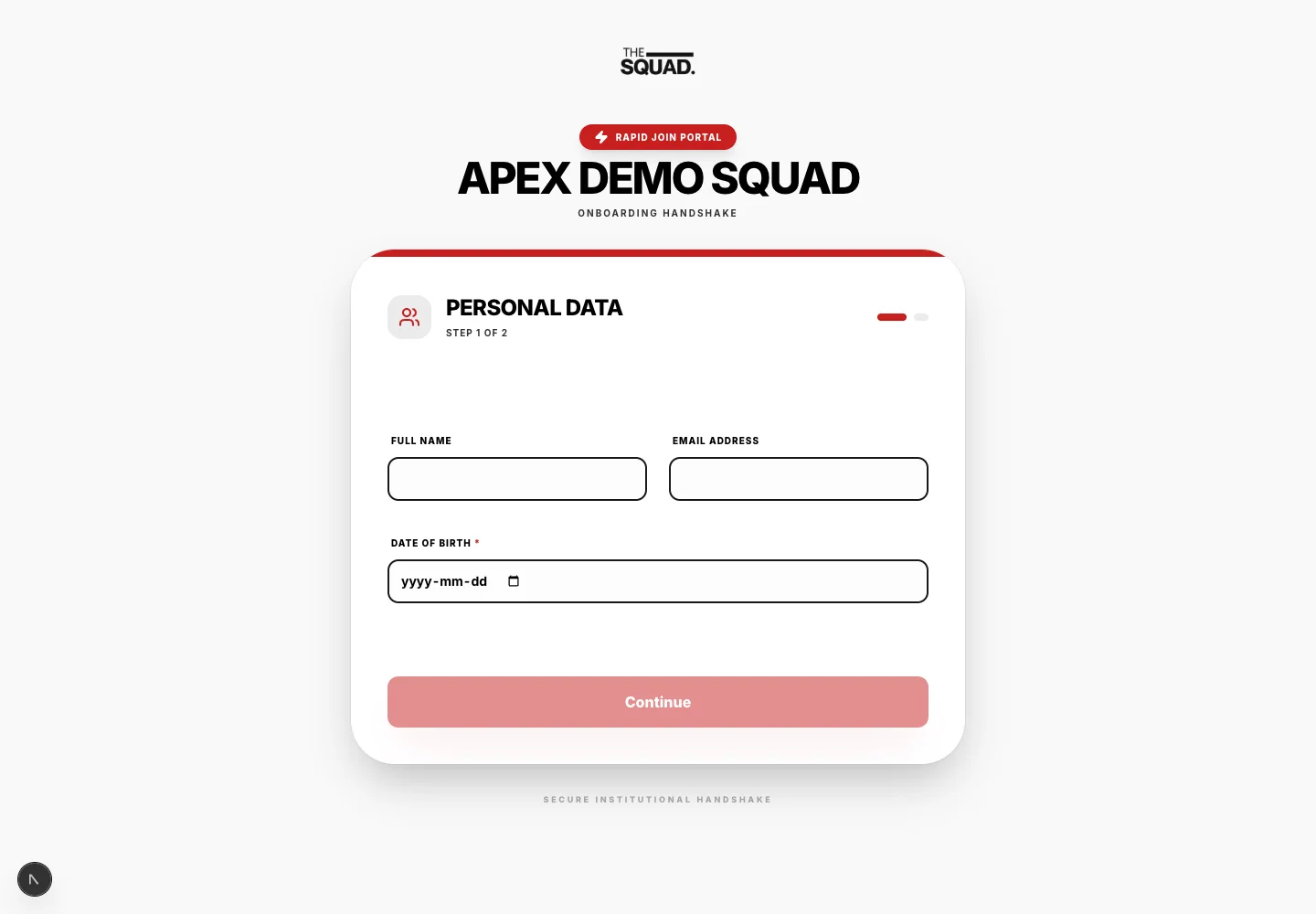
Roster management is the controlled process for registering, selecting, updating and granting access to a team’s participants.
How do you keep roster decisions and records consistent?
Use published criteria, a consistent registration record and a named process for approving roster changes.
The two biggest complaints about tryouts are inconsistency and lack of transparency. Both are solvable with process.
Use a Standardized Evaluation Form: Every evaluator assesses every athlete on the same criteria — technical skills (1–5), athletic ability, coachability, effort. Weight the criteria before tryouts, not after.
Multiple Evaluators: One evaluator creates one opinion. Three evaluators create data. Use at least two who score independently, then compare. A 2+ point difference triggers a structured conversation — don't just average.
Communicate the Process in Advance: Publish evaluation criteria and weights, number of spots available, timeline for decisions, and how athletes will be notified — including non-selections.
The Registration → Roster Workflow
- Conditional acceptance with a registration deadline (5–7 business days)
- Registration completion: form with emergency contacts, medical info, signed code of conduct, payment, proof of age/eligibility
- Roster lock date: after which changes require league approval
Managing Mid-Season Changes
Have a clear written policy for medical withdrawal (typically full refund minus admin fee), voluntary withdrawal before season (partial refund), voluntary withdrawal after season (typically no refund), and conduct removal.
Document every roster change with date, reason (in general terms), and decision made. This documentation protects your program.
Player Transfers and Guest Players
Build a checklist for each type. For transfers: paperwork with previous team, league approval, eligibility confirmation, emergency contacts. For guest players: league approval for specific event, registration/waiver signed, medical info on file.
Programs that handle roster management well aren't doing anything magical — they're doing it consistently, with written processes that don't depend on anyone's memory.
Roster Management Best Practices for Growing Programs
The Roster Management Problem
Ask any youth sports administrator about roster management and you'll hear the same story: spreadsheets that don't match reality, eligibility questions answered by memory, missing forms discovered on game day, and athlete information scattered across email threads, text messages, and paper sign-in sheets.
Growing programs need roster systems, not roster habits. The difference determines whether your administrative burden grows with your program — or stays manageable.
What Good Roster Management Looks Like
A well-managed roster is:
- Accurate — reflects current, verified athlete information
- Complete — all required data and documents are on file for every athlete
- Accessible — the right people can access it from anywhere
- Compliant — meets league, insurance, and legal requirements
- Secure — personal data protected appropriately
Core Data Fields Every Roster Should Include
For each athlete:
- Full legal name and preferred name
- Date of birth and age group verification
- Emergency contact (2 contacts minimum with phone numbers)
- Medical information (conditions, allergies, medications) — required for liability
- Insurance information (for some programs)
- Guardian/parent names and contact information
- Photo release consent status
- Liability waiver status (date signed, version)
- Eligibility status (verified, pending, ineligible)
- Registration payment status
Setting Up a Digital Roster System
Move off spreadsheets for anything beyond 20 athletes. Spreadsheets work for small, stable rosters. They break down with multiple editors, version control issues, and no automation.
Options by program size:
- 1–3 teams: TeamSnap, Spond, or SportsEngine Team
- 4–20 teams: SportsEngine or LeagueApps
- 20+ teams: Demosphere, Jersey Watch, or custom solutions
Key features to evaluate:
- Online registration that populates roster automatically
- Document collection and waiver e-signature
- Parent communication integration
- Export capabilities for league submissions
- Medical form storage with appropriate privacy protection
Roster Locks and Deadline Management
Most leagues have roster lock dates after which additions or changes require approval. Missing these deadlines creates eligibility problems in competitions.
Build your internal deadline 5–7 days before the official league deadline. This buffer catches late registrations and data errors before they become eligibility violations.
Roster lock communication protocol:
- Warning to coaches 14 days before internal deadline
- Reminder 7 days before
- Final notice 48 hours before
- Confirmation to coaches when lock is applied
Handling Roster Changes
Player additions: Requires new registration form, medical information, waiver signature, and any age verification. Process within 48 hours of receiving complete documentation.
Player removals (withdrawal): Update status to inactive immediately. Note withdrawal date and reason. Retain records per your retention policy.
Player transfers: Follow league transfer protocol. Document the date of transfer request, approval, and transfer effective date.
Annual Roster Audit
At the end of each season, conduct an audit before archiving records:
- Verify all signed waivers are on file
- Confirm all athletes have complete medical information
- Archive records per your data retention policy
- Remove or update outdated information
- Prepare clean template for next season
Consistent roster management is invisible when done well. It becomes very visible — and very costly — when it fails.
Handling Player Transfers Professionally
Transfers Are Relationship Tests
How a program handles player departures reveals its character as much as how it handles player arrivals. Coaches and programs that become hostile when an athlete transfers damage the sport's community and their own reputation.
Transfers happen for legitimate reasons: family moves, scheduling conflicts, program fit, development needs. Build a professional process that serves the athlete's best interests while protecting your program.
Understanding League Transfer Rules
Before building your internal process, know your league's transfer rules. Most competitive youth leagues and amateur associations have:
- Transfer windows: Specific periods when players may transfer
- Eligibility waiting periods: New players may be ineligible for a number of games after transfer
- Approval requirements: Transfers may require league approval or form submission
- Release requirements: The player may need an official release from their previous team
Ignorance of these rules creates eligibility violations that harm the athlete. Know them. Follow them.
Your Internal Transfer Protocol
When a player requests to transfer away from your program:
- Have a direct conversation. Understand the reason. Is this about something fixable (playing time, schedule)? Or is it genuinely about fit or circumstances? Sometimes a conversation resolves the issue; sometimes it confirms the transfer is the right move.
- Provide the release promptly. Once a family has made a decision, delay is punitive and unprofessional. Process any required league paperwork within 48–72 hours of the request.
- Communicate professionally with the receiving program. If contacted by the receiving program, be factual and professional. Share relevant information (medical information, positive context) that serves the athlete. Do not share negative commentary about the athlete or family.
- Maintain the relationship. Families who transfer out may have friends and community connections to your program. Programs that handle transfers gracefully get referrals and goodwill; programs that don't get the opposite.
When receiving a transfer from another program:
- Verify league eligibility. Before offering a spot, confirm the athlete is eligible to play immediately or understand the waiting period.
- Contact the previous program if required. Follow league rules about notification and release.
- Maintain neutrality about the previous program. Never disparage another program to a transferring athlete or family, even if invited to. It's unprofessional and reflects poorly on you.
- Onboard properly. A transferring athlete may have developed habits and skills differently from your current athletes. Onboard them into your culture intentionally (see First Team Meeting Playbook).
When Transfers Go Poorly
Occasionally a transfer involves genuine conflict: allegations of recruiting poaching, eligibility manipulation, or disputed circumstances. When this occurs:
- Document all communications in writing
- Reference league rules and follow the formal process
- Escalate to your league's governing body if a rule violation is alleged
- Do not engage in social media disputes or parent-network discussions
The formal process exists for these situations. Use it.
Managing a Waitlist Without Upsetting Parents
The Waitlist Trust Problem
A waitlist tells families: "We want your child, but not right now." Done well, it builds anticipation and loyalty. Done poorly, it breeds resentment — families feel strung along, ignored, or treated unfairly.
The difference between a well-managed and poorly-managed waitlist is almost entirely process: how positions are determined, how communication happens, and how conversions occur.
Setting Up Your Waitlist System
Position determination: First-come, first-served is the default and most defensible system. Timestamp registrations and rank accordingly.
What information to collect:
- Contact information (name, email, phone)
- Division/age group preference
- Alternate division acceptance (if full division isn't available, would they accept another?)
- How they heard about the program
Confirmation communication (immediate upon waitlist placement):
- Confirm they are on the waitlist
- Share their approximate position (or at minimum, whether they're in the top 25%, 50%, etc.)
- Explain the process for conversion: when spots typically open, how they'll be notified, response deadline for offers
Communication Schedule
Quarterly update (or monthly for shorter programs): Brief email confirming their status and any changes to the waitlist.
When a spot opens: Notify immediately by phone call, with email confirmation. Give a clear response deadline (24–48 hours) — spots that aren't confirmed convert to the next person.
End of season: If the waitlist doesn't clear, communicate that early registration for next season will be available and that waitlisted families get priority or early access.
Managing Position Expectations
Don't promise conversion. "You're #4 on the waitlist" is factual. "You'll definitely get a spot" is a promise you can't keep. Families who were promised spots and didn't get them are far more upset than families who were told position 4 may or may not convert.
Be honest about typical conversion rates: "Last season, the first 8 waitlist positions converted. We had 12 on the waitlist."
When Families Pressure for Special Treatment
A parent who knows the coach asks for their child to skip the waitlist. A family with a complex situation argues they deserve priority.
Your response is simpler when you have a published, documented system: "Our waitlist is first-come, first-served based on registration timestamp. Bypassing the list would be unfair to families who've been waiting longer. Here's your current position: #X."
A policy is protection. "The rules say" is far easier than "I decided." Publish your waitlist policy on your registration page before anyone is ever waitlisted.
Converting Waitlist to Enrollment
When you offer a spot:
- Make the offer by phone — personal contact, fast response
- Send written confirmation with enrollment deadline and any outstanding paperwork needed
- Build 24 hours of response time into your opening notification — longer gaps lose momentum
Track your waitlist conversion rate. If your waitlist consistently converts less than 30%, reconsider program capacity or spot your highest drop-off points in the conversion process.
Sources and further reading
- Federal Trade Commission: Protecting Personal Information — The regulator’s guide covers collecting only needed information, restricting access and disposing of records safely.
- U.S. Center for SafeSport: Minor Athlete Abuse Prevention Policies — The policy owner’s requirements for adult–minor interactions, communications and training. Check your sport’s adopted policy and jurisdiction.